
Running Emergency Kit & Simple First-Aid Checklist: What to Carry and How to Prepare
Running Emergency Kit & Simple First-Aid Checklist: What to Carry and How to Prepare
A good running emergency kit is small enough to carry comfortably but useful enough to help when a minor problem becomes a major inconvenience. For a familiar, short road run, a charged phone and identification may be all you need. Longer, remote, hot, cold, dark or solo runs call for more preparation. The aim is not to pack for every possible event; it is to make sensible decisions before you leave and to have a clear way to call for help if plans change.
Why runners need an emergency kit
Running takes you away from immediate access to a home, shop, car or first-aid box. A blister, cut, flat battery or sudden change in weather can leave you uncomfortable or unable to continue. On a trail or unfamiliar route, getting help may also take longer. Your kit should therefore reflect the route, distance, weather, daylight, access to water and whether someone knows where you are.
Think of emergency equipment as a backup, not a reason to ignore warning signs. If you feel seriously unwell, have difficulty breathing, suffer severe bleeding, suspect heat illness, sustain a serious injury or face any other emergency, contact emergency services and seek professional medical care. Do not rely on a compact first-aid kit to diagnose or treat a serious condition.
Running emergency kit checklist
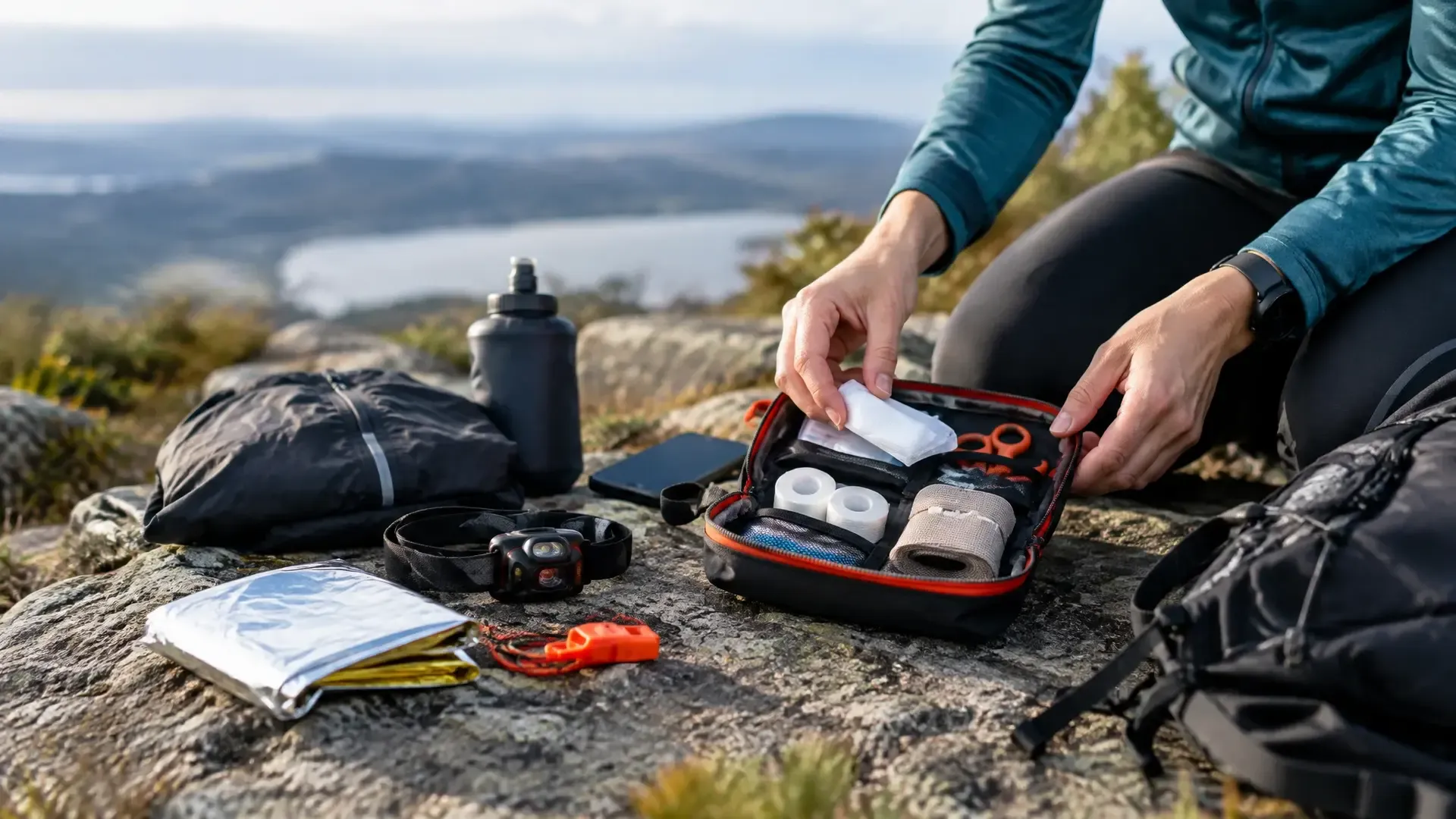
Start with the items that help you communicate, identify yourself and deal with foreseeable minor problems. Carry only what suits the planned run, and check that everything is accessible without stopping to empty a bag.
• Charged phone: Keep it charged before leaving and protect it from rain or sweat. Check that you have signal expectations for the route, but do not assume coverage everywhere.
• Identification and emergency details: Carry an ID card or other identification, plus an emergency contact. A small emergency contacts running card can be especially useful if your phone is locked or has no battery.
• Payment or transport option: A bank card, small amount of cash or transport pass may help if you need to take public transport, call a taxi or buy essential water. Choose what is practical for your area.
• Basic wound care: Pack a couple of plasters, sterile gauze or a small dressing, and suitable tape for minor scrapes or hotspots. Add hand sanitiser if useful, while remembering that cleanliness and proper medical assessment matter for significant wounds.
• Personal medication: If you have prescribed medication that you may need during the run, follow your clinician’s advice about carrying it. Do not share medication or add unfamiliar medicines to your kit.
• Water and suitable nutrition: Bring fluids or plan reliable water access according to the route, duration, weather and your individual needs. Longer or harder runs may also require appropriate food, but there is no single quantity that suits everyone.
• Visibility and navigation: Use reflective elements, a light, a charged navigation device or a physical route backup when darkness, poor weather or unfamiliar terrain makes them necessary.
For an ordinary daylight run close to home, you may not need every item on this list. For a remote trail, a long-distance route or an event with difficult access points, the same list becomes a baseline rather than a complete solution. If you are planning a demanding event, review the route and access arrangements in advance; reading about marathon safety considerations can also help put event preparation in context.
What belongs in a compact runner first-aid kit?
A runner first aid kit should address small, foreseeable problems without becoming a heavy medical bag. A few plasters in different sizes, a small dressing or gauze pad, tape, and blister protection are usually more realistic than a large collection of equipment. Pack items in a sealed, clearly labelled pouch so that they remain dry and can be found quickly.
Check the contents before each longer or more remote run. Replace anything used, wet, damaged or out of date. Avoid carrying prescription medicines or treatments unless they are intended for you and you have guidance on their use. First aid is about immediate, basic support while arranging appropriate help; it is not a substitute for emergency services, a trained responder or professional medical care.
Make an emergency contacts running card
A paper card can be valuable when a phone is damaged, locked or out of power. Keep it protected from moisture and update it whenever your details change. It should be brief enough for a responder to read quickly and should include your full name, an emergency contact and their relationship to you, relevant medical information or allergies, important medication information, and any detail that could affect immediate communication.
You can also include your preferred language, a medical alert note where appropriate, and the address or area where you are staying if you are travelling. Do not include more personal information than necessary. Store the card in the same secure place on every run so that you and others know where to find it.
Plan before a solo or unfamiliar run
Tell a trusted person where you intend to run, when you expect to return and what to do if you do not check in. For a short local run, a simple message may be enough. For a remote or longer outing, agree on a check-in time and an escalation plan, such as calling you first and then contacting emergency services if they cannot reach you and the delay is concerning.
Share your live location when it is appropriate and reliable, but treat it as an extra layer rather than your only safety measure. Know the local emergency number before travelling; 112 is the emergency number in many European countries, but confirm the correct service for your location. Note useful landmarks, trail junctions, road crossings and access points. If you need help, these details can be more useful than a vague description of the route.
Carry the kit without creating new problems
Use a running belt, vest, secure pocket or small pack that does not bounce, press into your ribs or rub your skin. Put heavier items close to your body and keep the phone and emergency card reachable. Test the arrangement during an easy run before using it on a long outing. Any loose object that shifts, chafes or makes you change your stride is in the wrong place or should be removed.
Water and food should be accessible without stopping if the route requires them. A lightweight shell, extra layer or headlamp may be more valuable than additional first-aid supplies when the forecast, season or daylight creates a realistic risk. The right kit is the one you will actually carry consistently and can use calmly.
Adapt your checklist to the run
Solo runs: Prioritise a charged phone, identification, emergency contact details and a route-sharing or check-in plan. Choose well-used routes when conditions or your experience make that sensible.
Trail and remote routes: Add navigation backup, extra clothing appropriate to the forecast, enough water planning for limited access, and a light if there is any chance of returning after dark. Learn where roads, shelters or other access points are located.
Night running: Wear visible or reflective clothing and use a reliable light. Consider how drivers, cyclists and other runners will see you, and avoid assuming that familiar routes are equally safe in darkness.
Hot or cold weather: Reassess the route, start time, clothing, water access and turnaround point. In extreme conditions, postponing the run or choosing a shorter, populated route may be the safest preparation.
Long runs: Plan for fatigue, changing weather and the possibility that you will need to stop. Identify refill and exit options, carry appropriate nutrition, and let someone know the full route rather than only the starting point.
Pre-run safety check
Before setting off, confirm that the route suits your current experience, fitness and condition. Check the weather and daylight, inspect your footwear and clothing, charge your phone, and consider where you can get water or leave the route if necessary. If you are ill, unusually fatigued or recovering from an injury, changing the plan is a sensible safety decision, not a failure.
Finally, review your kit occasionally. Replace used or expired supplies, charge devices, update emergency contacts and reconsider the contents when the season, route or distance changes. Practising your check-in plan and knowing where your phone, identification and first-aid items are kept makes a real emergency easier to manage calmly.