
Best Running Lights for Visibility: A Practical Comparison for Safer Runs
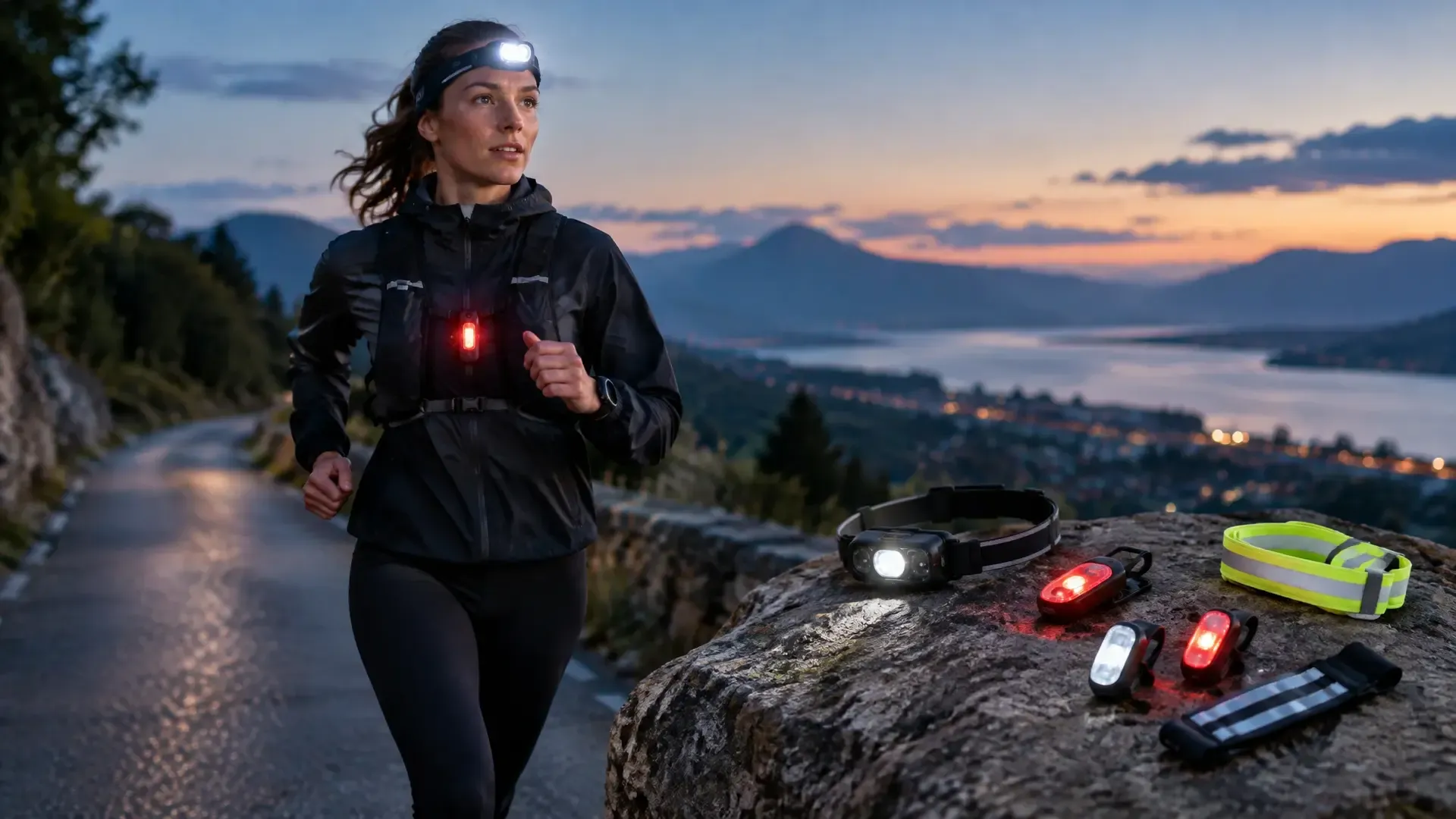
Best Running Lights for Visibility: A Practical Comparison for Safer Runs
The best running lights for visibility are not necessarily the brightest ones. The right setup depends on whether you need other people to notice you, enough light to see an unlit route, or both. For most runners, a small active light at the front, a rear light or reflective element, and clothing that remains visible from the side is a more useful combination than relying on one powerful lamp.
This comparison is research-based rather than the result of hands-on product testing. Specifications, prices and stock change, so check the manufacturer or retailer before buying. Where affiliate links are used, this site may earn a commission at no extra cost to you.
Quick recommendations by running situation
Best overall setup: a comfortable front light or headlamp combined with a rear-facing red light and reflective details. This gives approaching road users more than one angle from which to detect you.
Best for unlit paths: a stable headlamp with a controllable beam. It helps you see changes in surface, bends and obstacles rather than simply making you visible to others.
Best lightweight visibility option: a clip-on or chest-mounted LED paired with reflective clothing. This is usually less intrusive than a headlamp on a well-lit urban route.
Best rechargeable option: a USB-C light with a clear battery indicator and a runtime that comfortably exceeds your planned run. USB-C is convenient, but charging convenience is only useful if you remember to recharge it.
Best budget combination: one dependable front LED, one rear or clip-on light and reflective accessories. Buying several low-quality lights with vague specifications can be less practical than starting with two simple, visible devices.
What type of running light should you choose?
A headlamp is the most versatile choice for dark lanes, parks and trails. Because it follows your gaze, it can illuminate a corner or obstacle before your body reaches it. Look for a secure, adjustable strap, a beam that can be tilted down and more than one brightness setting. The drawbacks are weight on the forehead, possible bounce and the risk of dazzling people approaching from the other direction.
Chest-mounted lights sit lower and often produce a broad beam that makes surface changes easier to read. They can feel steadier than a headlamp for runners who dislike movement around the forehead. However, the beam does not automatically point where you look, and a jacket or hydration vest can partially obscure it. Check how the mount works with the layers you normally wear.
Waist lights and clip-on lights are useful when you mainly need to be seen on streets with existing lighting. A clip can attach to a waistband, pocket, vest or bag, while a waist light may offer useful front and rear coverage. Their limitations are lower placement, possible movement and obstruction by coats or loose tops. They are not usually a substitute for a proper route-illumination lamp on a completely dark path.
Armbands are easy to add to an existing kit and can provide valuable side visibility at junctions. They should fit securely without restricting movement, and the light should remain exposed as your arm swings. An armband alone may disappear behind the body from some angles, so consider it an extra signal rather than complete coverage.
Reflective clothing and accessories do not emit light. They return light from vehicle headlights or street lamps towards its source, which makes them particularly helpful from the front and rear. Active LEDs remain visible without an external beam, including in places where there is little traffic. Reflective material and LEDs solve different problems, so combining them is usually more effective than treating reflective trim as an alternative to a light.
How to compare running lights fairly
Start with visibility from the front, sides and rear. A front lamp may be excellent when viewed head-on but provide little signal from behind. Some products combine a forward beam with side windows or a rear red light; others require separate accessories. Consider the complete arrangement while wearing your normal winter layers, not just the device in isolation.
Next, assess the beam. Lumens and beam distance are manufacturer claims that depend on mode, battery level and conditions. A high maximum-lumen figure does not automatically mean a better running light. A wide, controlled beam may be more useful on a rough path, while a lower setting can be sufficient on a lit pavement. Check whether the product offers a steady mode as well as flashing modes, and whether the controls are easy to operate with cold fingers.
Comfort and stability matter over the whole run. Look for bounce, pressure points, sweat management and a fit that remains secure when you turn your head or increase pace. A light that shifts downwards can illuminate the wrong area, while a loose clip can turn away from traffic. Weight is relevant, but balance and mounting position often matter just as much.
For rechargeable running lights, compare the stated runtime at the brightness you expect to use, not only the lowest setting or a short maximum-mode figure. Look for a battery indicator, charging time where verified and a protected USB-C port. Cold weather can reduce effective battery performance, particularly when a battery is already partly depleted. On longer or remote runs, carrying a small backup light is sensible if a failed or forgotten charge would leave you without illumination.
Finally, check weather resistance, warranty terms, charging accessories and current price. An IP rating can help you compare protection against dust and water, but it does not mean a light is suitable for every form of immersion. Treat missing specifications as missing information rather than assuming the product matches a better-documented competitor.
Placement and courtesy on shared routes
Place active lights where clothing, hair, a running vest or a phone armband cannot cover them. A front light should face forward without pointing directly into oncoming faces. Aim a headlamp slightly down on shared paths, use a lower setting when you meet people, and avoid rapid flashing where it may distract or disorientate others. If you run on roads, a rear-facing red light and reflective details can add useful recognition from behind, but local rules and customs may differ by country.
Reflective elements work best on moving parts such as ankles, lower legs or wrists because movement helps distinguish a runner from a fixed object. They are still dependent on an approaching light source, so use them alongside—not instead of—an active light during genuinely dark conditions.
Buying guide: choose the complete setup
For a lit city route, choose a lightweight front or chest LED, add side visibility through an armband or reflective clothing, and use a rear light if you share roads with traffic. For an unlit pavement or canal path, prioritise a stable headlamp or chest light with a useful beam and keep a separate visibility light for other people to see you. For trail running, combine route illumination with reflective or active rear visibility, and consider carrying a backup light and charged phone. A trail safety and navigation guide can help with route planning and hazards that lighting alone cannot solve.
On longer outings, keep charging and carrying habits realistic. A small running emergency kit can complement your lighting setup with basic essentials for a minor problem, especially when you run away from busy streets. Lights improve detection and help you read the route, but no product guarantees that a driver, cyclist or pedestrian will notice you.
One unrelated example of why this article stays focused on practical equipment rather than sporting performance is this Gilgeous-Alexander scoring story; it has no bearing on running-light selection.
Final recommendation
For most European runners, the strongest starting point is a rechargeable front light that sits securely, a rear-facing active light and reflective details visible from the sides. Upgrade to a brighter, adjustable headlamp when the route is genuinely unlit, or choose a chest light if forehead movement bothers you. Compare real-use runtime, comfort, weather protection and viewing angles before maximum lumens. That approach produces a practical visibility system rather than an arbitrary single winner, and it remains useful across changing routes, seasons and weather.