
How to Run Safely at Night: A Practical Guide for Recreational and Club Runners
How to Run Safely at Night: A Practical Guide for Recreational and Club Runners
Night running can be a practical and enjoyable part of a training routine, especially in winter or for people who work during daylight hours. The safest approach is not one piece of equipment or one rule, but a simple system: help yourself see, make yourself visible, choose a predictable route, stay alert around traffic and remain connected if plans change.
In practice, that means wearing reflective or high-visibility elements, using a suitable headlamp or chest light when needed, choosing a familiar and well-lit route, carrying a charged phone and telling someone your plan for longer or more isolated runs. It also means slowing down when conditions or visibility are poor rather than assuming better equipment removes every hazard.
Be seen and help yourself see
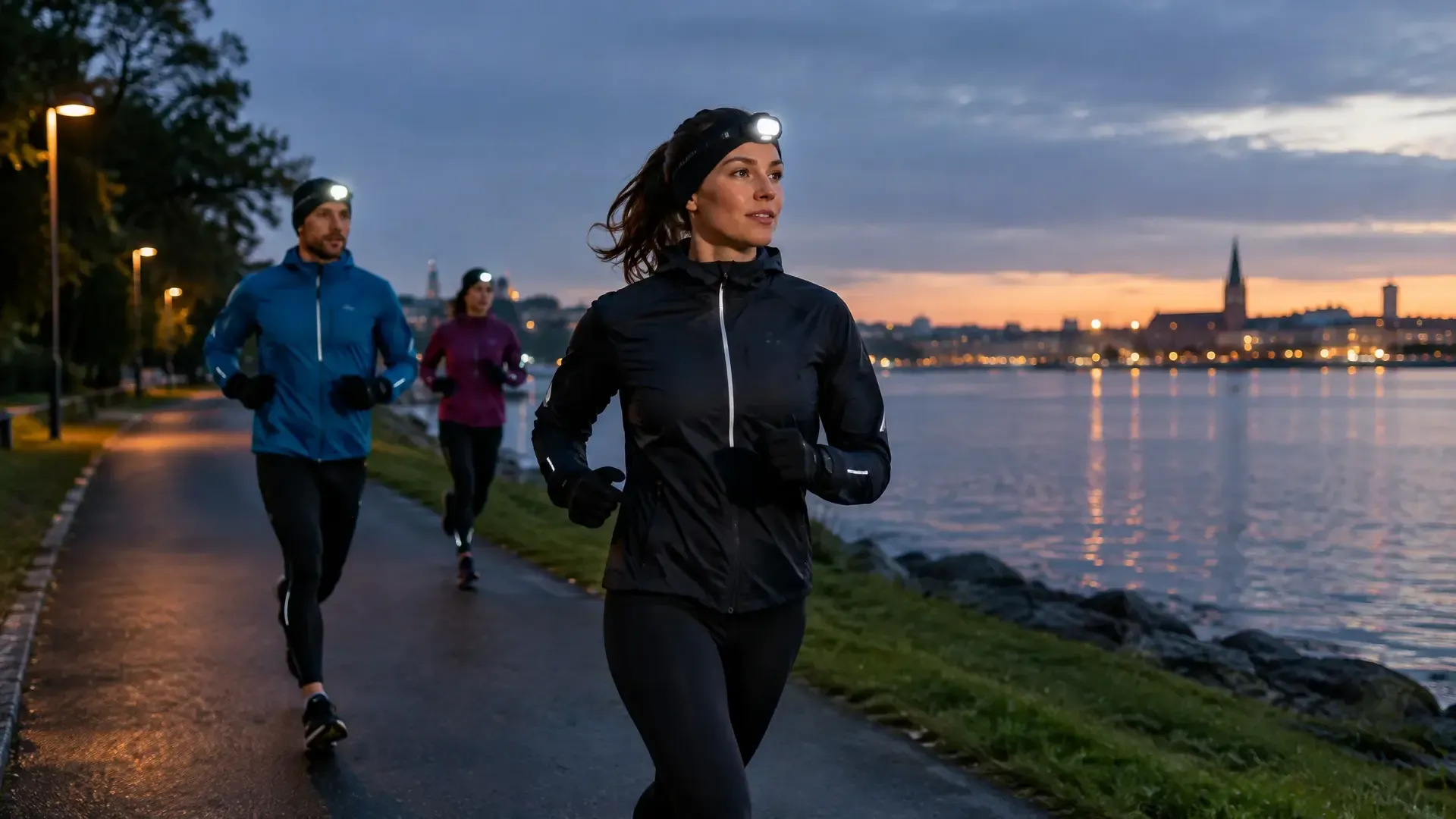
Visibility has two different jobs. Reflective material helps other road users detect you when their headlights or another light source reaches it. A headlamp, chest light or other forward-facing light helps you see the surface ahead, including potholes, loose gravel, uneven paving, leaves and puddles. One does not replace the other.
Reflective details on a jacket, vest, belt or running bands can be useful, and moving elements on the arms, wrists, ankles or legs may make your movement easier for drivers and cyclists to recognise. A small front or rear light can add active visibility, particularly on darker paths. The European Commission identifies high-visibility clothing as a relevant road-safety measure, while practical use still matters: equipment should be clean, correctly positioned and appropriate to the route.
Bright or fluorescent clothing is often more noticeable in daylight, twilight or areas with street lighting. After dark, however, colour alone is not a substitute for reflective material or a light. Guidance from North Wales Police makes this useful distinction clear. Think of bright clothing as an additional aid and reflectivity or lighting as the more important part of a night-running setup.
Choosing a headlamp or running light
There is no universally best headlamp for every runner. Choose one according to the route, weather and length of your run. It should fit securely without bouncing or causing pressure, provide a beam pattern that lets you read the ground ahead and have enough battery life for the planned outing, with some margin for delays.
Manageable brightness matters as much as maximum brightness. A very intense beam can be uncomfortable for people approaching from the other direction and may make it harder to judge surroundings when it reflects off rain or fog. A lower setting is often sufficient on a lit pavement, while an unlit path may require more light. Check the device before leaving, and remember that cold or ageing batteries may not perform as expected.
A forward-facing lamp does not necessarily make you visible from behind. Add a rear light, reflective vest or another visibility element where appropriate, particularly on routes that share space with vehicles or bicycles. The broader road-safety principle is shared responsibility: both drivers and pedestrians need adequate visibility, rather than the runner carrying the entire burden.
Choose a predictable route after dark
For urban running after dark, familiarity is a safety advantage. Prefer maintained routes with consistent lighting, clear sightlines, predictable crossings and places where you could pause or seek assistance, such as open shops or public facilities. A slightly longer route is often preferable to an isolated shortcut with poor surfaces or limited visibility.
Before setting out, consider whether construction, parked vehicles, overgrown vegetation or temporary barriers will change the route. Avoid paths where you cannot see what is ahead, and be cautious around heavily trafficked roads even when a pavement is available. If you are running somewhere new, inspect it in daylight first or use a route you can leave easily if weather, fatigue or discomfort develops.
Trail sections require another level of preparation because darkness hides roots, rocks, mud and changes in elevation. If you occasionally leave paved routes, review this trail safety and navigation guide before relying on a familiar daytime route at night.
Stay deliberate around traffic
Use pavements, designated paths or crossings where they are available, and follow the road rules that apply where you live. At driveways, junctions and crossings, slow down and look carefully rather than assuming a vehicle has seen you. Make eye contact where possible, but do not treat it as a guarantee that a driver will stop.
Road positioning rules differ between jurisdictions and can also depend on the road, the presence of a pavement and local conditions. Do not apply a single universal rule without checking local guidance. Whatever the legal arrangement, choose the position that gives you time and space to respond, remain visible and avoid stepping suddenly into the path of traffic.
Shared paths need similar care. Keep enough volume from headphones to hear bicycles, vehicles and people nearby, or run without them in sections where awareness is especially important. Avoid looking at a phone while moving; if you need navigation, stop in a visible, safe place. Constant awareness is most valuable at crossings, blind bends and transitions between lit and unlit areas.
Prepare for a solo run
For a short, familiar run in a populated area, your preparation may be simple. For a longer, less familiar or more isolated outing, tell someone your route and expected return time. Carry a charged phone, identification and relevant emergency information, and know how you would contact help. A small amount of water or extra clothing may also be sensible when the weather or distance makes delays more likely.
Have an abort plan before you leave. That could mean turning back at a particular point, moving to an open public place, calling for a lift or ending the run when visibility, weather, injury or personal safety deteriorates. You do not need to justify stopping: changing the plan is a normal part of sensible preparation. For a more detailed approach to what to carry, see this running emergency kit checklist.
Personal safety planning should remain practical and non-alarmist. Choose options that fit your circumstances, whether that means running in daylight when possible, using a familiar loop, checking in with a friend or joining a club session. If broader wellbeing planning includes online gambling concerns, this separate guide to EU self-exclusion schemes covers a different form of support and should not be confused with running-specific emergency preparation.
Make group and club runs work at night
A group is not automatically safer if it spreads out or assumes everyone has the same pace and experience. Before starting, agree on the route, regrouping points and what happens if someone falls behind. The group should use a pace and distance appropriate for the slowest participant, particularly on unfamiliar or poorly lit sections.
At crossings, keep the group organised rather than allowing people to cross in scattered pairs. Call out hazards such as broken paving, bollards, cyclists or vehicles, and make sure the message reaches the back of the group. A simple head count at the start, at major regrouping points and at the finish helps confirm that everyone has completed the session safely.
Adapt to weather and surfaces
Rain can create glare and make both headlights and your own lamp less effective. Fog scatters light and reduces contrast, while wet leaves, ice and painted road markings can become slippery. Darkness also reduces depth perception, so a familiar step or kerb may not look as it did during the day.
Slow down when the surface is difficult, shorten your stride if necessary and leave more room to react. Brighter equipment can help you identify hazards, but it cannot restore dry grip or daylight visibility. If conditions deteriorate beyond what you can comfortably manage, use your abort plan and head somewhere safe.
A simple night-running routine
Use this short checklist before and during the run:
• Before leaving: check your light and battery, add reflective or active visibility, review the route and weather, charge your phone, and share your plan when the run is long or isolated.
• While running: stay alert, keep headphone volume low or avoid headphones, slow at junctions and hazards, follow local rules, and turn back or stop if conditions no longer feel manageable.
Conclusion
The repeatable routine is straightforward: choose a route you understand, use reflectivity to be seen and a suitable light to see, treat every crossing and driveway with care, stay connected on longer runs and communicate clearly when running with others. With those habits in place, night running becomes a planned activity rather than a test of luck.